
Federalist Papers Book Club
Meetings are on the first, third, and fifth Wednesdays of August through November at the Waterbury Public Library.
6:30 - 8:00 PM, upstairs in the nook
Please RSVP to judi@waterburypubliclibray.com
"That frequent recurrence to fundamental principles ... [is] absolutely necessary to preserve the blessings of liberty, and keep government free..." (VT Constitution Art. 18)
About the Papers
The Federalist Papers are a series of essays written in 1787-1788 arguing in favor of ratifying the new proposed US Constitution. They were written by members of the Convention and authors of the Constitution, and present - in their own words - the strongest case they could for the new system.
What the Founders did was unprecedented, and they did the best they could with ideals and reason alone. But now, we have 250 years of experience to guide us on what's working and what's not. The Federalist Papers Book Club will look at these key decisions made at the nation's founding, and how they've played out in practice throughout our history, and in the present day.
Each session will begin with answering questions to understand what these old and often difficult documents are actually saying. We'll then discuss and analyze their arguments, guided by examples from the past 250 years, to answer key questions including:
Has the American experiment worked out like the Federalists thought it would?
What did the Founders predict correctly? What did nobody see coming?
Are we convinced by their arguments? Would we vote to adopt it if we were there at the time?
Would we make the same choices if we were building from scratch today?
About the Authors
James Madison was a Virginia plantation owner and considered the "father of the Constitution." He later became Secretary of State and the fourth US President.
Alexander Hamilton was a New York military officer, lawyer, and banker. He later became Secretary of the Treasury and a Broadway sensation.
John Jay was a New York lawyer and diplomat, and President of the Continental Congress. He later became the first Chief Justice of the Supreme Court and Governor of New York.
All three were members of the Continental Congress and delegates to the Constitutional Convention. They used the pseudonym Publius to honor one of the legendary founders of the Roman Republic.
About the Host
Evan Karl Hoffman is a history enthusiast, member of the Waterbury Select Board, and advocate for constitutional reform. He is passionate about civics education and increasing democratic participation.
Upcoming Sessions
October 7th: the executive
Essential reading (6,591 words, 48:54)
Federalist 68 (1497 words) - audio (11:10)
Federalist 70 (3060 words) - audio (22:39)
Federalist 72 (2034 words) - audio (15:05)
Recommended reading
Federalist 67 - 77:
Federalist 67 (1636 words) - audio (13:00)
Federalist 69 (2739 words) - audio (19:12)
Federalist 71 (1701 words) - audio (12:27)
Federalist 73 (2343 words) - audio (16:51)
Federalist 74 (996 words) - audio (7:42)
Federalist 75 (1938 words) - audio (14:16)
Federalist 76 (2296 words) - audio (14:08)
Federalist 77 (1969 words) - audio (14:25)
Anti-Federalist Cato IV - audio (8:34)
Extent of presidential powers:
Humphrey’s executor (1935), a landmark Supreme Court case limiting the President’s control over certain parts of the executive branch, and Trump v. Slaughter (2026), which largely overturned it
The imperial presidency and unitary executive theory, legal theories regarding the extent of presidential power
Executive Order 9066 and Executive Order 6102, which led to mass incarceration without trial, criminal prosecutions, and property seizures on the order of the President, without a law passed by Congress
Administrative rulemaking, laws written by the executive branch
The rest of the executive branch and its relationship to the Presidency:
The spoils system, which gave federal offices to political supporters of the President, and the Pendleton Civil Service Reform Act, which replaced it with the modern civil bureaucracy
Schedule F appointments, claimed to increase public accountability for policy-making roles, but also accused of enabling political retribution against career civil servants
The Deep State and the Rogue National Park Service, alleged elements of the executive branch working against or outside the formal system of political accountability
Several US Attorneys resigned over the dismissal of corruption charges as a political favor. Others have resigned rather than carry out politically motivated prosecutions.
Inspectors General (auditors and oversight investigators within some agencies) have been dismissed without proper cause, in what has been described as a threat to their independence
Other ways to structure the executive branch:
Plural executive, seen in many states including Vermont, with a separate Governor, Lieutenant Governor, Treasurer, Secretary of State, Auditor, and Attorney General, each elected independently with it own distinct responsibilities. They also share executive power with county-level Sheriffs, High Bailiffs, and States’ Attorneys.
Governor-in-Council, as seen in New Hampshire and Massachusetts, and proposed but rejected at the Constitutional Convention, requires council agreement to exercise some of the governor’s powers
Switzerland’s Federal Council, seven equal members collectively acting as president, who split leadership of the executive departments amongst themselves
Election of 1796, the first contested presidential election, and arguably the only one where the Electoral College functioned as originally envisioned
Election of 1800, when the Electoral College had mostly taken its modern form
Key questions
Is the veto necessary to protect the power of the executive branch, as the Federalists argue? Is that how it’s typically used?
Why do you think we have posters, flash cards, socks, children's books, and more with the names and faces of presidents, but not Speakers of the House or Chief Justices of the Supreme Court? Why does the President occupy so much of our attention?
Vermont, like most states, has several independent executive officers, all elected separately. Is this a benefit, because it limits consolidation of power, or a detriment, because it diffuses responsibility and limits public scrutiny?
In the past few years, there’s been a lot of discussion and controversy about the independence of agencies like the Federal Reserve and the Federal Trade Commission. Arguments on one side say these bodies need to be insulated from politics, and make decisions based on expertise and evidence; and on the other side, that their important decisions need to be accountable to the political process and ultimately to the voters. How do you approach that tradeoff? What might the Federalist authors have said about these agencies?
Similarly, there have been examples (both real and conspiracies) of employees of the executive branch refusing to carry out directives from the President, or actively working against established policy. How much personal discretion should lower executive branch employees have to modify policy? How much control should the President and higher leadership have over their employees?
County-level executives in Vermont have a track record of bad behavior, with current or recent officeholders accused of assaulting prisoners, drunk driving, verbally abusing staff, stalking and sex crimes, improper financial deals, and questionable plea deals. Why does it keep happening, and what does it tell us about elections as a tool for accountability?
The Electoral College was one of the least criticized parts of the Constitution during the ratification debates, but possibly the most criticized part today. Is it a sound concept? Does it balance the national will and state sovereignty, as alleged in Federalist 39? Is it a good idea to have the President elected by an indirect body? (In some countries, the president is elected by the national legislature.) Why didn’t the Antifederalists see problems with the EC, when they picked apart every other part of the Constitution?
October 21st: Congress
Essential reading (18,272 words, 2:17:40)
Federalist 53 (2162 words) - audio (16:43)
Federalist 54 (1995 words) - audio (15:24)
Federalist 55 (2034 words) - audio (15:18)
Federalist 56 (1560 words) - audio (11:52)
Federalist 58 (2083 words) - audio (15:46)
Federalist 59 (1899 words) - audio (13:57)
Federalist 64 (2305 words) - audio (17:57)
Federalist 65 (2014 words) - audio (14:35)
Federalist 66 (2220 words) - audio (16:08)
Recommended reading
Federalist 52 - 66:
Federalist 52 (1842 words) - audio (13:44)
Federalist 57 (2203 words) - audio (16:25)
Federalist 60 (2233 words) - audio (16:13)
Federalist 61 (1515 words) - audio (11:16)
Federalist 62 (2381 words) - audio (17:35)
Federalist 63 (3033 words) - audio (22:45)
Anti-Federalists:
Brutus III, apportionment (2583 words) - audio (15:09)
Brutus XVI, the Senate (707 words) - audio (12:39)
Cato V - audio (10:08)
Key questions
How many people should each member of Congress represent? How many members should there be overall? Is there a conflict between those two answers?
In the first Census in 1790, the largest and smallest states had a population ratio of 12.6 to 1 (fully counting both free and slaves). In the 2020 Census, the largest and smallest states had a ratio of 68.5 to 1. Does it still make sense for all states to have the same representation in the Senate? Do small states still need protection from large ones? Are there other ways the states could be represented?
Your vote as a Vermonter has 61.5 times as much influence in the Senate as a Californian’s, and 3.4 times as much in the Electoral College. Are you comfortable with wielding more power than other American citizens? Would you be comfortable giving it up?
How often should we hold elections? Are there better ways of keeping politicians accountable? Should they be accountable all the time, or do they sometimes need to do things that are unpopular?
Congressional districts are based on geography. What other ways could the country be split into constituencies? For example, age, wealth, occupation, race, religion, gender? What advantages or disadvantages are there to giving a voice to these demographic divisions?
Should there be two chambers of Congress, instead of one, or three or more? Should the people and the states have equal weight? Are there other groups or entities that should have a hand in passing legislation?
November 4th: the judiciary, amendments, & conclusion
Essential reading (8,725 words, 1:03:18)
Federalist 79 (1019 words) - audio (7:57)
Federalist 81 (3781 words) - audio (27:04)
Federalist 84 (3925 words) - audio (28:17)
Anti-Federalist Brutus XI, power creep & activist interpretation (2521 words) - audio (17:12)
Anti-Federalist Brutus XV, superior & uncontrollable (2448 words) - audio (15:52)
Recommended reading
Federalist 43, 49 - 50, 78 - 85:
Federalist 43 § 8 (3434 words) - audio (25:28)
Federalist 49 (1644 words) - audio (12:37)
Federalist 50 (1102 words) - audio (9:12)
Federalist 78 (3011 words) - audio (21:48)
Federalist 80 (2450 words) - audio (18:31)
Federalist 82 (1532 words) - audio (11:28)
Federalist 83 (5705 words) - Part 1 audio (22:36), Part 2 audio (19:19)
Federalist 85 (2657 words) - audio (19:33)
U.S. Constitution, Amendments 1 - 27 (3089 words)
Anti-Federalists:
Brutus XII, expansion of federal power (1634 words) - audio (17:22)
Federal Farmer IV, wide-ranging conclusion (3239 words) - audio (19:51)
Marbury v. Madison (1803), the first important Supreme Court case, in which it grants itself ultimate powers not found in the Constitution
Key questions
The Judiciary:
If so much of the federal judiciary could be left up to the discretion of Congress, why not other parts of the government?
The Supreme Court is often criticized for being unelected and undemocratic, especially after they release an unpopular decision. Would electing Justices be an improvement, or would it just make the Court more political?
What about other federal judges? What would a political campaign for federal judge look like?
Do all institutions need to be fully democratic? Are there other ways of bringing democratic power into the court system?
Do we understand the legal arguments being made on both sides, with all the talk of jurisdiction, common law, writs, and law, fact, and equity? How important is it for the average citizen to understand the legal system?
How much discretion should judges have to interpret laws? On the one hand, no system of laws can ever be complete, and it’s inevitable that they will need to be applied to new circumstances their authors couldn’t have foreseen, especially the Constitution itself, which is old, vague, and rarely updated. On the other hand, it allows judges to insert their own opinions and biases, even though they’re not the ones elected to create new laws.
Amendments:
How did you feel hearing the Federalists defend things that have already been amended out (such as indirect election of senators, or unlimited terms for the President)?
Opponents of a Bill of Rights felt that without it, all rights would be reserved by the people, and listing some implies the exclusion of others. Advocates for the Bill of Rights felt that without listing any, we would end up with none. Which do you find more convincing? Which have the courts sided with? If we didn’t have any Bill of Rights, would we have more or fewer rights than we have now?
Are constitutional amendments too easy or too hard?
Who should have the power to change the constitution? Congress, the states, the President or courts, the people, or someone else entirely?
Contrast the federal amendment procedure against Vermont’s amendment procedures.
Federal: ⅔ of both houses of Congress or application of ⅔ of states, followed by ratification by ¾ of states.
Vermont until 1870: proposed by a separate Council of Censors elected every seven years, ratified by a convention consisting of one delegate from each town.
Vermont since 1870: ⅔ of the Senate and ½ of the House elected on a certain schedule (every ten years from 1870 to 1970, every four years since 1974), followed by ½ of each house after the next election, followed by a majority vote of the public at the next election after that.
Which do you prefer? What’s the best way to balance the various powers and interests among the parts of the government and the people? Which has resulted in a better form of government?
Past Sessions
August 19th: Should we even have a Union?
Federalist 2 (1662 words) - audio (14:23)
Federalist 3 (1438 words) - audio (12:35)
Federalist 6 (2130 words) - audio (17:16)
Federalist 8 (1986 words) - audio (15:36)
Federalist 10 (2994 words) - audio (23:30)
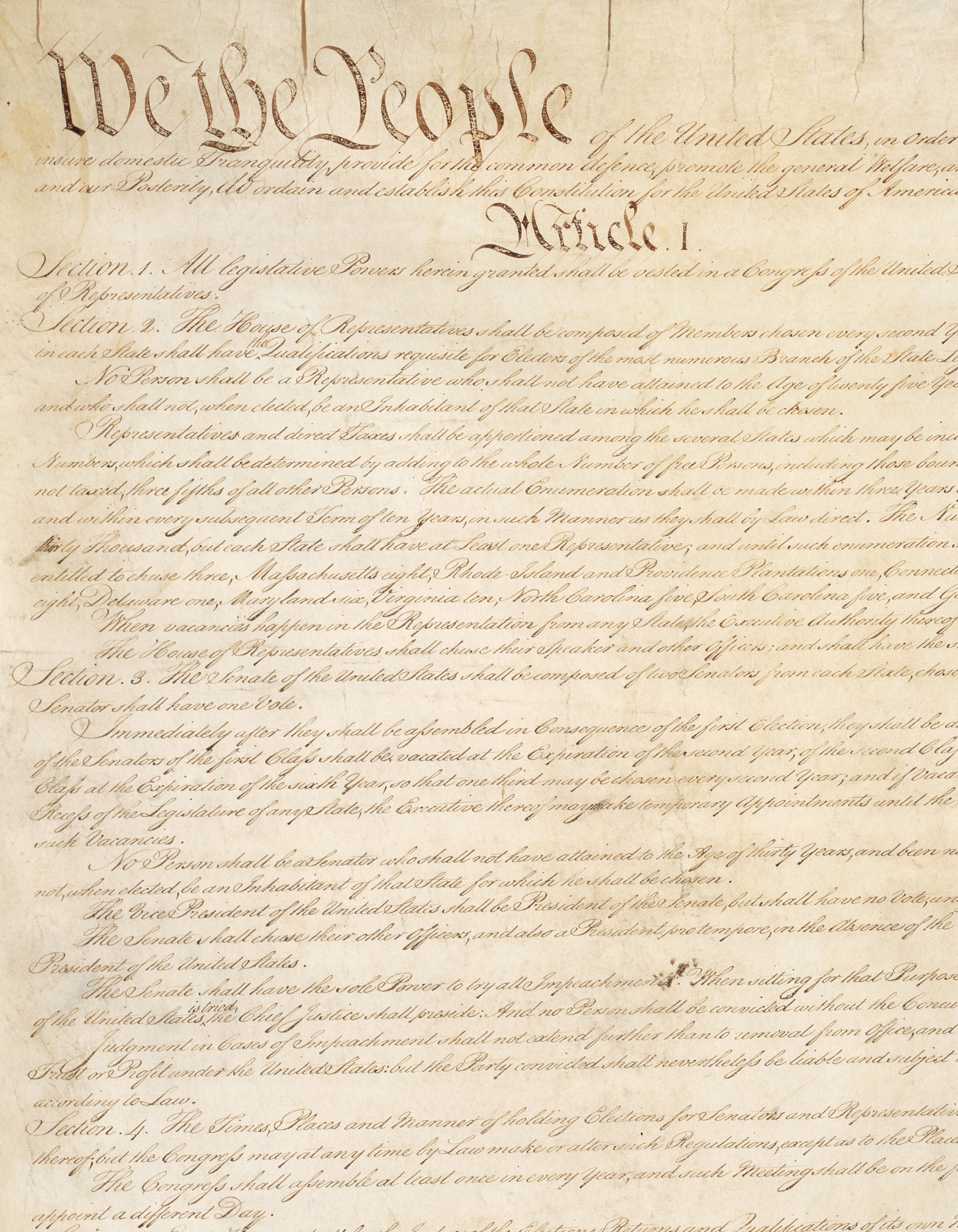
U.S. Constitution, Articles I - VII (4373 words)
Essential reading (10,210 words, 1:23:22)
Federalist 1 - 14:
Federalist 1 (1583 words) - audio (12:34)
Federalist 4 (1626 words) - audio (13:32)
Federalist 5 (1337 words) - audio (11:30)
Federalist 7 (2250 words) - audio (17:32)
Federalist 9 (1980 words) - audio (15:38)
Federalist 11 (2488 words) - audio (19:02)
Federalist 12 (2141 words) - audio (16:29)
Federalist 13 (957 words) - audio (7:41)
Federalist 14 (2136 words) - audio (15:55)
Anti-Federalist Centinel XI, against the threat of anarchy (1058 words) - audio (7:30)
Anti-Federalist Cato III - audio (9:27)
Modern debates on “national divorce” from various perspectives
Recommended reading
Do you identify yourself more as a Vermonter or an American? Do you feel more connected to the state or national government? Which level of government is doing a better job? Which are you more informed about?
Do Publius’ arguments support a unified world government? Would that be a good idea? Is there a limit on how big a country can practically be?
If you were to split the US into several smaller countries, where would you put the boundaries? Who would stand to benefit, and who would lose?
How does the discussion about “faction” apply in the modern political environment? What might the Federalists say about the two-party system?
The Enlightenment view of human nature (see No. 6 and No. 10) is a recurring theme throughout the papers. Do you agree with the Federalists’ opinion of the masses? What about the politicians?
What do you think of the authors’ use of a pseudonym, instead of attaching their real names to the project? What are the benefits and drawbacks of anonymity in political discourse?
Key questions
September 2nd: Problems with the Articles of Confederation
Essential reading (10,139 words, 1:15:51)
Federalist 15 (3073 words) - audio (22:34)
Federalist 16 (2032 words) - audio (15:29)
Federalist 17 (1562 words) - audio (12:25)
Federalist 22 (3472 words) - audio (25:23)
Federalist 27 (1416 words) - audio (11:07)
Recommended reading
Federalist 15 - 23:
Federalist 18 (2085 words) - audio (16:52)
Federalist 19 (2020 words) - audio (16:12)
Federalist 20 (1513 words) - audio (12:42)
Federalist 21 (1991 words) - audio (15:21)
Federalist 23 (1795 words) - audio (13:44)
Key questions
Were the Articles of Confederation really so broken? Could their issues have been fixed without creating an entirely new system?
Are there any aspects of the Articles that you see as beneficial, that should have been preserved?
Some modern international organizations operate similarly to the Confederation:
NATO is a military alliance funded by voluntary requisitions, much like the United States under the Articles.
The European Union requires unanimity for most decisions, and depends on member states to implement EU law through their own legislative process.
These organizations have been successful for decades, but also show signs of strain. Should we take their success as evidence against the Federalists’ argument that confederations are doomed to failure? Or should we take their limitations as evidence the Federalists were right, and are the Articles a roadmap for their future reform or collapse?
How might the Articles have handled various stress tests in American history? Particularly slavery, the Civil War, and the civil rights movement, which all involved direct conflict between states and the federal government?
In the current moment, would further centralization be a good or bad thing?
September 16th: Federal powers, the military, and taxation
Essential reading (9,707 words, 1:13:57)
Federalist 25 (1981 words) - audio (15:02)
Federalist 26 (2378 words) - audio (17:51)
Federalist 33 (1684 words) - audio (13:20)
Federalist 35 (2248 words) - audio (16:37)
Federalist 24 - 36:
Federalist 24 (1817 words) - audio (14:03)
Federalist 28 (1588 words) - audio (12:18)
Federalist 29 (2232 words) - audio (16:32)
Federalist 30 (1962 words) - audio (14:45)
Federalist 31 (1728 words) - audio (13:10)
Federalist 32 (1482 words) - audio (11:37)
Federalist 34 (2209 words) - audio (16:17)
Federalist 36 (2727 words) - audio (19:52)
Anti-Federalists:
Brutus VII, taxation methods (2808 words) - audio (14:51)
Brutus VIII, debt and armies (1710 words) - audio (9:21)
Recommended reading
Key questions
We’ve had a standing army for about a hundred years now, and it’s mostly been fine. Are there factors that make our current military less dangerous than what existed then? Were the Founders wrong about the dangers? Or were they right, and it’s only a matter of time before they turn on us?
What about federal law enforcement? Can they be used against civilians in the same way a standing army allegedly can?
Is the two-year time limit on military appropriations an effective way to keep the military in check, and maintain power in Congress? What about modern “must-pass” defense bills?
The Federalists seem to expect public insurrection and violent resistance by state governments to be a regular, even common, part of our political system (see No. 28). Why don’t we see that as often as they did in their time? Is the system unbalanced without that assumed check on federal power?
The federal government performs many functions that aren’t part of its constitutional mandate, most notably welfare programs. The Federalists present federal powers as basically just a military, a trade bloc, and some taxation to support it. Modern defense spending is about one-eighth of the total federal budget, while Social Security, Medicare, and Medicaid together are about half.
Should these programs be ended just because they’re not explicitly constitutional?
Should the Constitution be updated to reflect what we’ve come to expect from the federal government?
Are there better ways of providing and funding those services?
September 30th: Federalism and checks & balances
Essential reading (17,310 words, 2:10:38)
Federalist 38 (3315 words) - audio (24:57)
Federalist 39 (2605 words) - audio (19:18)
Federalist 44 (2895 words) - audio (21:52)
Federalist 45 (2116 words) - audio (16:07)
Federalist 46 (2610 words) - audio (18:56)
Federalist 48 (1858 words) - audio (14:42)
Federalist 51 (1911 words) - audio (14:46)
Recommended reading
Federalist 37 - 48, 51:
Federalist 37 (2709 words) - audio (21:56)
Federalist 40 (3013 words) - audio (23:18)
Federalist 41 (3549 words) - audio (26:40)
Federalist 42 (2776 words) - audio (20:35)
Federalist 43 (3434 words) - audio (25:28)
Federalist 47 (2740 words) - audio (20:45)
Anti-Federalists:
Centinel I, instability of balances, federal power creep (3987 words) - audio (27:37)
Federal Farmer III (6041 words) - audio (35:53)
Brutus I, consolidation of power (4582 words) - audio (29:13)
Legal doctrines:
Compact theory vs social contract theory
McCulloch v. Maryland (1819), a landmark Supreme Court case limiting states’ ability to interfere with federal operations, and establishing implied federal powers
Other ways of thinking about checks and balances:
Parliamentary system, coalition government, confidence and supply. Waterbury is essentially a parliamentary republic; the voters elect the Select Board (legislative branch) which oversees and hires or fires the Town Manager (executive branch). Corporations are generally set up this way as well, with the CEO reporting to a board of directors elected by shareholders.
Parliamentary sovereignty: mostly unique to the UK without a written constitution, the legislature can ultimately reshape any part of the government through regular laws, including overriding the courts or repealing limits on its own powers.
Supreme state organ of power: a Soviet system combining legislative, executive, and judicial powers.
Key questions
How has the supremacy of the federal government been used for good in our history? How could it be used for the worse? How is it being used today?
The Federalists envision a balanced opposition between states and the federal government, but federal courts have repeatedly held that states have no power to ignore federal laws, and that the ultimate authority to interpret federal powers lies with the federal government’s own courts. What does this imply for the system of checks and balances?
Which branches of the government are doing more than they’re allowed to by the Constitution? Which ones are doing less than they’re supposed to?
Which branch of the government has the most power to override the other branches? Are there other ways they could be kept in check?
Do the branches of government effectively counter each other? How do national political parties - which coordinate across the branches - affect the Federalists’ reasoning?
In recent decisions (Auditor v. Attorney General, 2025, pages 6-7; Auditor v. OneCare, 2022, page 4), the Vermont Supreme Court gave us a very different interpretation of the separation of powers: the Auditor (a constitutional officer) has no inherent powers to do anything, except what the legislature has explicitly granted. Is this a reasonable restriction to put on an independent elected officer? Does the executive branch need its own inherent authority outside of legislative approval, and how far should it extend?
Parliamentary systems, including Canada and the UK, have an executive branch that’s subordinate and accountable to the legislature, instead of independent and equal. There’s some evidence that such systems are more stable and less prone to coups and authoritarian takeovers, but it also puts the executive at the mercy of legislative deadlock. Why did the Federalists feel that an independent executive was so important?